


- HOME
- Expert Guides
- Scalp Tension and Hair Loss: What Does Science Say?
Scalp Tension and Hair Loss: What Does Science Say?
Scalp Tension and Hair Loss: Is There a Scientific Connection?
Hair loss is a complex biological process influenced by genetics, hormones, inflammation, nutrition and the hair follicle growth cycle.
In recent years, researchers have explored whether the mechanical environment surrounding hair follicles might also influence hair growth.
One emerging hypothesis concerns the relationship between scalp muscle activity, tissue tension and androgenetic alopecia.

Understanding scalp anatomy
The scalp consists of several anatomical layers, including the skin, subcutaneous connective tissue, galea aponeurotica and deeper connective tissues.
The frontalis, occipitalis and temporalis muscles contribute to movement and tension across different regions of the scalp.
Hair follicles exist within this dynamic tissue environment.
However, the presence of muscular tension does not establish that it causes hair loss.
What is androgenetic alopecia?
Androgenetic alopecia is a genetically influenced condition characterised by progressive follicular miniaturisation.
In susceptible follicles, androgen signalling contributes to a shortening of the anagen growth phase and the production of progressively finer hair fibres.
Over time, affected follicles may produce shorter, thinner hairs, reducing visible density.
Genetic susceptibility and androgen biology remain central to the established understanding of this condition.
The scalp tension hypothesis
Some researchers have proposed that mechanical tension, local inflammatory signalling and changes in the scalp’s microenvironment could contribute to follicular changes.
These hypotheses have encouraged investigation into interventions intended to alter scalp muscle activity.
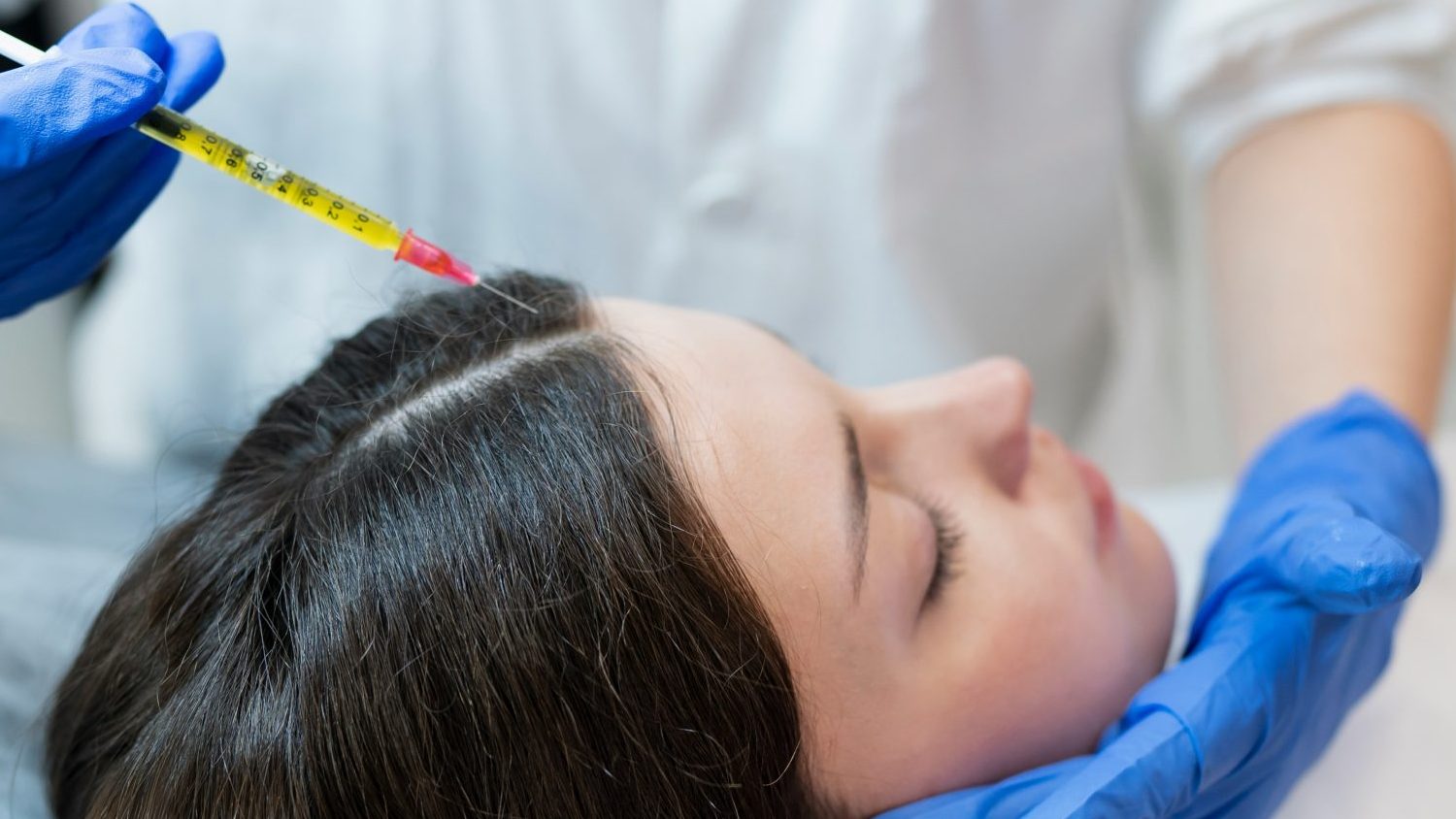
One systematic review examined five clinical studies involving botulinum toxin injections for androgenetic alopecia.
Although some studies reported improvements in hair measurements, the evidence was limited by small study populations, methodological differences and the absence of comparisons with established treatments.
These findings are preliminary and do not establish scalp injections as an effective or routinely recommended treatment for androgenetic alopecia.
Does relaxing the scalp improve circulation?
It has been proposed that reducing muscle activity might influence local tissue conditions, including blood flow.
However, this proposed mechanism remains insufficiently validated as an explanation for meaningful clinical hair regrowth.
Hair follicle biology cannot be reduced to circulation alone.
Hormonal sensitivity, immune activity, genetics and follicular cycling all contribute to the progression of different hair-loss disorders.
Why accurate diagnosis matters
Not every patient with thinning hair has androgenetic alopecia.
Telogen effluvium, alopecia areata, inflammatory scalp disorders and scarring alopecias require different approaches.
Clinical history, scalp examination, trichoscopy and appropriate investigations can help distinguish these conditions.
Objective measurements of hair density and fibre diameter may also support longitudinal assessment.
What does this mean for future research?
The relationship between mechanical signalling and follicle biology remains an interesting research area.
Larger, well-controlled studies are needed to establish whether interventions targeting scalp muscle activity provide clinically meaningful benefits, which patients might benefit and how their safety compares with established treatments.
Final thoughts
Scalp relaxation should not be confused with a proven treatment for hair loss.
Although early research raises interesting biological questions, established diagnostic principles and evidence-based management remain the foundation of responsible trichology.
References
- English, R.S. Jr and Ruiz, S. (2022) ‘Use of botulinum toxin for androgenic alopecia: A systematic review’, Skin Appendage Disorders, 8(2), pp. 93–100. https://doi.org/10.1159/000518574
- Lolli, F. et al. (2017) ‘Androgenetic alopecia: A review’, Endocrine, 57, pp. 9–17.


