


- HOME
- TREATMENTS
- Dermalux Tri-Wave MD Gravesend | Sculpture Clinic
Dermalux Tri-Wave MD Gravesend | Sculpture Clinic
Dermalux Tri-Wave MD LED Light Therapy in Gravesend
Three Wavelengths. Personalised Light Energy. Medical-Grade Phototherapy.
Light can do more than illuminate the skin. At carefully selected wavelengths and doses, it can interact with biological processes involved in inflammation, cellular activity and tissue repair.
At Sculpture Clinic in Gravesend, Kent, we offer Dermalux Tri-Wave MD, a professional medical LED phototherapy system designed for a range of dermatological, aesthetic and selected medical applications.
Unlike a conventional LED facial, Dermalux Tri-Wave MD allows us to select different wavelengths of light and adjust the delivered energy according to the treatment indication.
We offer Dermalux as both a standalone treatment and a supportive therapy alongside selected skin, scalp and dermatology procedures.
Our approach is based on individual clinical assessment, appropriate treatment selection and realistic expectations.

What Is Dermalux Tri-Wave MD?
Dermalux Tri-Wave MD is a medical LED phototherapy device that delivers controlled light energy through three specific wavelengths:
- Blue light — 415 nanometres (nm)
- Red light — 633 nanometres (nm)
- Near-infrared light — 830 nanometres (nm)
Each wavelength interacts differently with biological tissue.
The process is known as photobiomodulation, in which light is absorbed by molecules within tissue and can influence cellular signalling and activity.
Depending on the wavelength, dose and condition being treated, these effects may contribute to changes in inflammation, cellular metabolism, skin appearance and tissue repair.
The treatment is non-invasive, does not involve injections and generally requires little or no recovery time.
Understanding the Three Dermalux Wavelengths
Blue Light — 415 nm
Targeting Acne-Associated Bacterial Activity
Blue light is particularly relevant to acne-prone skin.
At 415 nm, light can interact with naturally occurring porphyrins associated with Cutibacterium acnes, producing reactive oxygen species that can reduce bacterial activity.
Blue light may be considered for:
- Moderate inflammatory acne
- Acne-prone skin
- Selected inflammatory breakouts
- Supporting an established acne treatment programme
Blue light is not necessarily the most appropriate option for every skin condition. Its use is selected according to the clinical presentation, skin type and treatment objectives.
Red Light — 633 nm
Supporting Skin Quality and Cellular Activity
Red light is commonly used in photobiomodulation programmes aimed at skin rejuvenation and supporting tissue function.
It can influence cellular signalling pathways associated with inflammation and extracellular matrix activity.
Red light may be considered for:
- Improving the appearance of fine lines
- Supporting skin texture and radiance
- Selected superficial skin concerns
- Supporting recovery following appropriate procedures
- Complementing treatment plans for inflammatory skin concerns
Improvements are generally progressive and depend on the condition being treated, treatment schedule and individual response.
Near-Infrared Light — 830 nm
Supporting Tissue Recovery and Musculoskeletal Comfort
Near-infrared light is not visible to the human eye.
At 830 nm, it penetrates tissue differently from visible blue and red light and is used in selected photobiomodulation applications.
Potential clinical applications include:
- Temporary relief of minor muscle and joint pain
- Reducing temporary stiffness
- Supporting local circulation
- Selected wound-healing programmes
- Supporting post-procedure recovery
- Complementing certain inflammatory skin treatment plans
Near-infrared therapy does not replace investigation or treatment of an underlying medical condition.
Why Do We Combine Different Wavelengths?
Not every skin concern involves the same biological processes.
Acne may involve bacterial activity and inflammation. Skin ageing involves changes in collagen organisation and other structural components. Tissue recovery involves a complex sequence of inflammatory, proliferative and remodelling processes.
By selecting individual wavelengths or using them in combination, Dermalux Tri-Wave MD provides flexibility to address different treatment objectives.
For example, an acne-focused programme may use blue light alongside red or near-infrared light, whereas a rejuvenation programme may place greater emphasis on red and near-infrared wavelengths.
The selection is based on the condition being treated, rather than routinely using all three lights for every patient.
Personalised Light Energy: Why Your Treatment Is Different
One of the important features of Dermalux Tri-Wave MD is its ability to adjust treatment parameters.
At Sculpture Clinic, we believe that effective phototherapy should be matched to the individual rather than delivered as the same programme for everyone.
Understanding Light Dose
The amount of light energy delivered to a treatment area is commonly expressed in joules per square centimetre (J/cm²).
This is known as the energy dose or fluence.
The dose depends on factors including the light intensity and exposure time.
A higher dose does not automatically produce a better result. Biological responses to photobiomodulation can vary according to the treatment parameters and the tissue being treated.
How We Personalise Your Dermalux Treatment
Following assessment, we consider:
Your treatment objective
Are we addressing inflammatory acne, skin appearance, recovery or a suitable musculoskeletal concern?
Your skin type and sensitivity
We consider your skin characteristics, pigmentation history and any relevant sensitivity or photosensitivity risks.
The wavelength combination
We select blue, red or near-infrared light individually or in combination, depending on the intended treatment.
The delivered energy
The device allows us to use indication-specific programmes or customise treatment parameters within the manufacturer’s guidance.
Treatment duration and frequency
A single supportive session may be appropriate in some circumstances, while other concerns benefit from a planned course.
Your response over time
We review tolerability, clinical findings and progress before adjusting subsequent treatments.
This means your treatment is based on a clinical objective, not simply a standard light setting.
Dermalux as a Standalone Treatment
Dermalux Tri-Wave MD can be offered independently of other skin procedures.
Acne and Breakout-Prone Skin
Blue light phototherapy may be considered for selected patients with inflammatory acne.
It may be offered as part of a planned LED course, although prescription medicines and established acne management remain important where clinically indicated.
Skin Rejuvenation and Ageing Skin
Red and near-infrared phototherapy may be used in programmes addressing visible skin quality, texture and fine lines.
These treatments are non-ablative and do not produce the same tissue effects as resurfacing procedures.
Redness and Inflammatory Skin Concerns
Selected light programmes may be considered for certain inflammatory or redness-related concerns.
However, conditions such as rosacea, eczema and dermatitis require accurate diagnosis and appropriate medical management. Phototherapy is not a universal treatment for all forms of inflammation.
Psoriasis
Dermalux Tri-Wave MD includes a manufacturer-defined psoriasis programme.
This should be distinguished from conventional ultraviolet phototherapy, which has a more established role in psoriasis management.
Any use of LED phototherapy for psoriasis requires appropriate clinical assessment and should not replace established medical treatment.
Wound Healing and Tissue Recovery
Photobiomodulation has been investigated for its potential to support aspects of tissue repair.
Dermalux may be considered for selected wound-healing applications following appropriate clinical assessment.
Wounds caused by infection, poor circulation, diabetes or other medical conditions require diagnosis and appropriate wound management. LED treatment must not delay necessary medical care.
Musculoskeletal Pain and Stiffness
Near-infrared light has recognised applications in the temporary relief of certain minor muscle and joint symptoms.
Dermalux may be considered for suitable patients seeking non-invasive supportive management of minor musculoskeletal discomfort.
It is not intended to replace medical assessment for persistent, severe or unexplained pain.
Dermalux as a Supportive Treatment
One of the reasons we incorporate Dermalux into Sculpture Clinic is its potential role alongside other clinical treatments.
Dermalux and NeoGen Nitrogen Plasma
NeoGen creates a controlled tissue response intended to stimulate subsequent skin remodelling.
Where appropriate, Dermalux may be used as part of a post-treatment support programme, with the aim of supporting comfort and recovery.
Treatment timing, wavelength selection and dose depend on the NeoGen treatment intensity, the condition of the skin and the manufacturer’s relevant protocols.
Dermalux does not eliminate the expected recovery period or guarantee faster healing.
Dermalux and HydraFacial
HydraFacial focuses on cleansing, exfoliation, extraction and hydration.
Dermalux can be incorporated as an additional light-based stage for selected patients, depending on their skin concerns and treatment tolerance.
Dermalux and Microneedling
Microneedling produces controlled micro-injuries to stimulate a wound-repair response.
Selected LED protocols may be considered following treatment, where the skin condition and clinical guidance permit.
Dermalux and Medical-Grade Skincare
LED phototherapy can complement an appropriate skincare programme.
We consider current topical treatments, including prescription medicines, before selecting phototherapy because some ingredients or medicines can increase photosensitivity.
Dermalux and SkinRx
For patients receiving personalised prescription skincare, Dermalux may be considered as an additional treatment where clinically suitable.
The objective is to support a coordinated treatment plan, rather than introduce unnecessary procedures.
Dermalux for Scalp Health and Hair Restoration
Photobiomodulation is also an area of interest in trichology.
Research involving certain low-level light devices suggests potential benefits for selected forms of pattern hair loss, although outcomes depend on device characteristics, treatment parameters and the condition being treated.
At Sculpture Clinic and through our GrowBack trichology services, we may consider light-based therapy as part of a broader scalp and hair assessment.
Potential supportive applications include selected scalp treatment programmes and post-procedure care.
However, Dermalux Tri-Wave MD should not be described as an approved standalone treatment for androgenetic alopecia without specific evidence and regulatory authorisation for that indication.
A hair-loss consultation remains essential to establish the diagnosis and determine whether evidence-based medical treatment is required.
Other Specialist Medical Applications
The manufacturer’s documentation also describes photodynamic therapy, or PDT, using an appropriate photosensitising medicine and a controlled light source.
PDT is used in specialist dermatology for selected conditions, including certain actinic keratoses and non-melanoma skin cancers.
This is a distinct medical procedure, not equivalent to a routine Dermalux LED session.
It requires the correct diagnosis, suitable medicine, validated protocol and appropriately trained clinical service.
The availability of a PDT-capable device does not mean that cancer treatment is included within Sculpture Clinic’s routine Dermalux service.
What Happens During a Dermalux Treatment?
1. Consultation and Assessment
We discuss your treatment objectives, relevant medical history, medications and suitability for LED phototherapy.
2. Personalised Programme Selection
Your clinician selects an appropriate wavelength combination, dose and treatment duration.
3. Skin Preparation
The treatment area is prepared according to the relevant protocol. Appropriate protective eyewear is provided.
4. LED Phototherapy
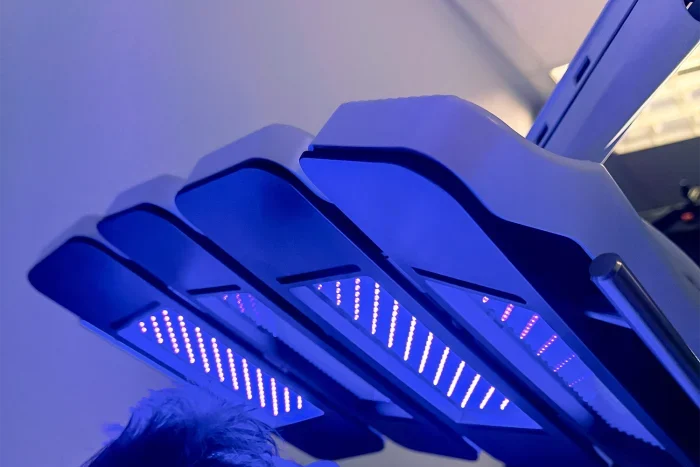
You relax while the Dermalux panels deliver the selected light energy to the treatment area.
Treatment sessions are generally up to 20 minutes of light exposure, depending on the programme.
5. Aftercare and Review
Most patients can return to normal activities immediately. Any specific aftercare depends on the condition treated and whether Dermalux was combined with another procedure.
How Many Treatments Will I Need?
The recommended number of sessions depends on your treatment objective.
Some patients choose a single Dermalux session as part of a supportive skin treatment, while others follow a structured course.
Conditions such as acne and selected skin rejuvenation concerns may require repeated sessions over several weeks.
For longer-term programmes, we review progress and adjust treatment where appropriate.
Where facial skin changes are being monitored, VISIA imaging may help document selected visible characteristics over time.
Is Dermalux Suitable for Everyone?
Although Dermalux is non-invasive, it is not suitable for every patient.
Before treatment, we assess relevant contraindications and precautions, including photosensitive medical conditions, medications that increase light sensitivity, pregnancy and other factors identified in the manufacturer’s instructions.
Appropriate eye protection is required.
We also consider the underlying diagnosis and whether a different medical treatment or specialist referral would be more appropriate.
Frequently Asked Questions
Is Dermalux the same as an ordinary LED facial?
No. Dermalux Tri-Wave MD is a professional medical LED phototherapy system with defined wavelengths, adjustable treatment parameters and manufacturer-specified clinical programmes.
Does Dermalux treatment hurt?
Most patients find treatment comfortable. It is non-invasive and does not intentionally damage the skin surface.
Can I have Dermalux without another treatment?
Yes. Dermalux can be booked as a standalone treatment following an appropriate suitability assessment.
Can Dermalux be combined with NeoGen?
It may be incorporated into selected post-NeoGen care plans where clinically appropriate. Timing and treatment settings are determined by your clinician.
Is red light better than blue light?
Neither is universally better. Blue light has a particular role in acne-related bacterial activity, while red light is more commonly used for skin rejuvenation and selected tissue-support applications.
Can Dermalux help hair growth?
Low-level light therapy has evidence for certain hair-loss conditions, but this does not establish Dermalux Tri-Wave MD as an approved hair-regrowth treatment. We assess hair-loss concerns individually.
Does Dermalux require downtime?
Standalone treatment generally requires little or no downtime. When combined with another procedure, recovery is determined primarily by that procedure.
How do you decide which light settings to use?
We consider the clinical indication, skin characteristics, treatment objective and manufacturer guidance before selecting wavelengths, energy dose and exposure time.
Book Dermalux Tri-Wave MD in Gravesend
A more personalised approach to light therapy.
Whether you are exploring LED phototherapy as a standalone treatment or as part of a wider skin treatment programme, Sculpture Clinic offers a clinically considered approach using Dermalux Tri-Wave MD technology.
From acne-prone skin and rejuvenation to selected recovery and musculoskeletal applications, we focus on choosing the appropriate light treatment for your individual needs.
Book a Dermalux Tri-Wave MD consultation at Sculpture Clinic in Gravesend, Kent.


