


- HOME
- Expert Guides
- What Is NeoGen Plasma? Benefits, Results & Suitability
What Is NeoGen Plasma? Benefits, Results & Suitability
NeoGen Plasma Treatment: How It Works, Benefits, Results and Whether It Is Right for You
If your skin is beginning to look less firm, smooth or radiant, but you do not want to change your facial features with injectables, NeoGen Plasma may provide another option.
NeoGen is an advanced skin-regeneration treatment that uses controlled nitrogen plasma energy to stimulate repair within the skin. It can be personalised to address concerns including fine lines, uneven texture, laxity, enlarged pores, sun damage and some forms of pigmentation.
Unlike a standard facial, NeoGen is designed to initiate a progressive regenerative response. The aim is not to make you look different, but to improve the quality, strength and appearance of your own skin.
At Sculpture Clinic in Gravesend, every NeoGen journey begins with a detailed consultation and skin assessment. Your treatment intensity, number of sessions and expected recovery time are selected according to your skin rather than applying the same protocol to every patient.

What is NeoGen Plasma?
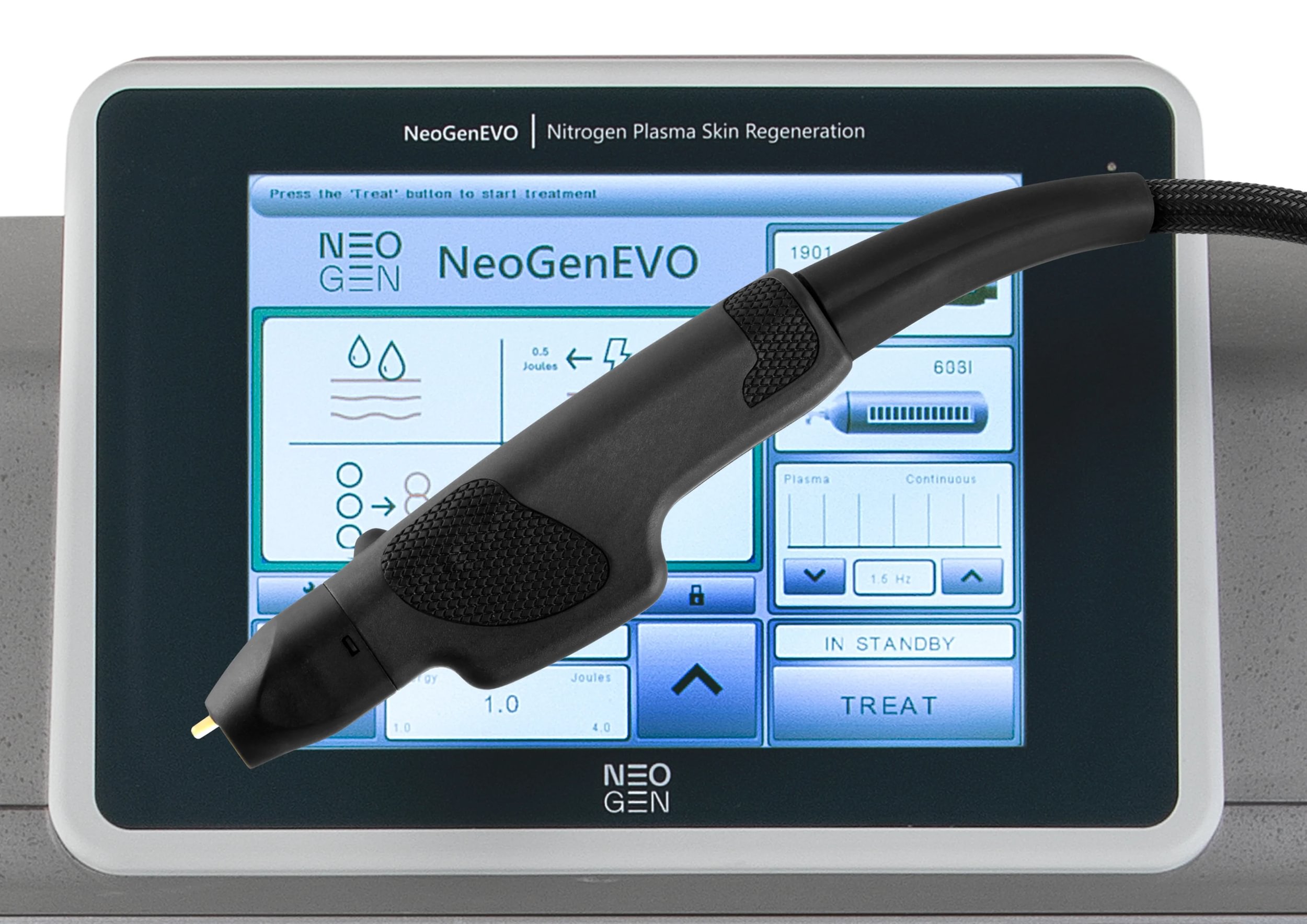
NeoGen Plasma is an energy-based treatment that converts medical-grade nitrogen gas into plasma.
Plasma is sometimes described as the fourth state of matter. During treatment, controlled pulses of plasma energy are delivered to the skin, where they produce a carefully managed thermal effect.
This is not the same as plasma pen or fibroblast plasma treatment. NeoGen does not create individual burn-like dots across the skin. It delivers nitrogen plasma energy across the treatment area in a controlled and clinically planned manner.
NeoGen is also not a laser. Lasers use specific wavelengths of light, whereas NeoGen transfers energy through nitrogen plasma.
How does NeoGen Plasma work?
The treatment delivers controlled thermal energy into the skin without relying on a particular target, such as pigment or water, to absorb a laser wavelength.
This controlled energy initiates a natural repair response. Depending on the treatment intensity, NeoGen may support:
- Contraction and remodelling of existing collagen
- Production of new collagen and elastin
- Renewal of the epidermis
- Improvement in skin texture and firmness
- Progressive regeneration within the dermis
- A more even and refined skin appearance
At higher treatment energies, the treated outer layer of skin may initially remain in place and act as a temporary protective covering while renewal begins underneath. This layer subsequently becomes dry and sheds as fresher skin is revealed.
The biological response continues after the visible recovery period. This is why improvements may develop gradually over several weeks and months rather than appearing fully on the day of treatment.
Research into nitrogen plasma skin regeneration has identified changes associated with epidermal renewal and collagen remodelling. Clinical studies have also reported improvements in photoageing and mild-to-moderate lines around the eyes, although results vary between individuals (Bogle et al., 2007; Foster et al., 2008; Theppornpitak et al., 2019).
What can NeoGen Plasma improve?
NeoGen can be adapted to address several concerns within one personalised treatment plan.
Fine lines and wrinkles
Collagen and elastin provide structure and elasticity to the skin. Their production reduces with age, while sun exposure and lifestyle factors can accelerate their breakdown.
By creating controlled thermal stimulation within the skin, NeoGen may soften the appearance of fine lines and improve the quality of crepey skin. It is particularly useful where the objective is gradual skin regeneration rather than temporarily relaxing facial movement.
Loose or crepey skin
NeoGen may improve mild-to-moderate laxity by stimulating collagen contraction and longer-term remodelling.
It can be considered for concerns around the cheeks, jawline, eyes and neck. However, it is important to be realistic: NeoGen is not a surgical facelift and cannot reproduce the degree of lifting achieved by surgery.
The eye area
The upper and lower eye areas are common treatment zones because the skin is thinner and often shows early signs of ageing.
NeoGen can be carefully adjusted to treat fine lines, crepiness and reduced firmness around the eyes. A randomised controlled study found improvements in mild-to-moderate periorbital wrinkles following a course of nitrogen plasma treatments (Theppornpitak et al., 2019).
Suitability for treatment close to the eyes must always be assessed during consultation.
Uneven texture and enlarged pores
NeoGen may help produce a smoother, more refined appearance by supporting epidermal renewal and dermal remodelling. Patients may notice gradual improvements in roughness, superficial irregularities and the visible appearance of pores.
Pores cannot be permanently removed because they are a normal part of the skin. Treatment aims to make them appear less prominent.
Sun damage and uneven pigmentation
NeoGen may help improve some forms of superficial sun damage and uneven pigmentation as the epidermis renews.
Pigmentation is complex, however, and not every type should be treated in the same way. Melasma and skin with a tendency towards post-inflammatory hyperpigmentation require particularly careful assessment. Treatment energy, preparation, aftercare and sun protection must all be considered before proceeding.
Acne scarring
By encouraging collagen remodelling and improving surface texture, NeoGen may form part of a treatment plan for selected acne scars.
The likely response depends on the type and depth of scarring. Deep ice-pick, tethered or rolling scars may require a combination approach rather than NeoGen alone. Active acne should also be assessed and controlled as part of the overall plan.
Low-, medium- and high-energy NeoGen explained
NeoGen is not one fixed treatment. Its intensity can be adjusted according to the treatment objective, skin assessment and acceptable recovery time.
Lower-energy treatment
Lower-energy treatment is generally selected for progressive skin improvement with less visible recovery. It may be suitable for patients wanting to improve radiance, early fine lines, texture or general skin quality through a course of treatments.
Some redness, warmth, dryness or light flaking can still occur.
Medium-energy treatment
Medium-energy NeoGen creates a stronger regenerative response and may be selected for more established texture changes, lines, sun damage or laxity.
The skin may become red or bronze in appearance before feeling dry and beginning to shed. Visible recovery is likely to be more noticeable than after a lower-energy session.
Higher-energy treatment
Higher-energy treatment is used when a more intensive resurfacing and regenerative response is appropriate.
It normally involves more pronounced redness, bronzing, dryness and shedding. Social downtime may last approximately seven to ten days, although healing varies and residual redness can persist for longer.
Higher energy is not automatically better. The most appropriate setting is the one that balances your skin concerns, medical history, skin characteristics and ability to manage the recovery period safely.
What happens during a NeoGen consultation?
At Sculpture Clinic, NeoGen is consultation-led. Treatment is not performed simply because a patient has selected it from a price list.
Your consultation may include:
- A discussion about your concerns and desired outcome
- Review of your medical history, medication and previous treatments
- Assessment of your skin type, barrier health and pigmentation risk
- Examination of the areas you would like treated
- VISIA skin analysis where appropriate
- Discussion of treatment intensity and recovery time
- A personalised skincare and preparation plan
- An explanation of expected benefits, limitations and risks
- Photography to support treatment planning and progress monitoring
If your skin barrier is compromised, inflamed or excessively dry, we may recommend a period of skin preparation before NeoGen. This helps place the skin in a better condition for treatment and recovery.
Read our full guide on how to prepare your skin for NeoGen Plasma.
What happens on treatment day?
Your skin will be cleansed and prepared before the selected NeoGen settings are confirmed.
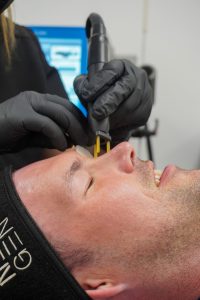
The handpiece delivers short pulses of nitrogen plasma energy across the planned area. Patients commonly describe a feeling of warmth or brief heat. Comfort varies according to the treatment area and energy selected.
Treatment time depends on the areas being treated and the complexity of the individual plan. After treatment, the skin may appear pink or red and feel warm, tight or similar to mild sunburn.
At Sculpture Clinic, NeoGen may be supported by an appropriate post-treatment recovery protocol. Any combination treatment must be planned carefully rather than added automatically.
When will I see results?
Some patients notice that their skin looks fresher or smoother after the initial recovery period. However, NeoGen results should be viewed as progressive.
Collagen remodelling takes time. Improvements in texture, firmness and lines may continue to develop over several weeks and potentially for a number of months following treatment.
The speed and degree of improvement depend on factors including:
- Age and baseline skin condition
- The concern being treated
- Treatment energy
- Number of sessions
- Sun exposure
- Smoking
- General health
- Skincare and adherence to aftercare
- Individual biological response
Results cannot be guaranteed, and photographs should be taken under consistent conditions when progress is assessed.
How many NeoGen treatments will I need?
There is no correct number for every patient.
A lower-energy programme commonly involves a course of treatments, often spaced approximately four to six weeks apart. A more intensive treatment may be performed less frequently and require a longer recovery period.
At Sculpture Clinic, a typical regenerative programme may involve four sessions, but this is adjusted to the patient. Some people may benefit from a single targeted treatment, while others may require a structured course followed by maintenance.
Your recommended programme will be explained following consultation.
View our current NeoGen Plasma treatment options and prices.
How much downtime should I expect?
Downtime depends primarily on treatment intensity and individual skin response.
Following treatment, you may experience:
- Redness
- Warmth or sensitivity
- Mild swelling
- A tight or dry sensation
- Bronzing or darkening of the treated skin
- Flaking, peeling or shedding
- Temporary itching
- Temporary changes in pigmentation
As a general guide:
- Low-energy treatment: approximately one to two days of mild visible recovery
- Medium-energy treatment: approximately five to seven days
- High-energy treatment: approximately seven to ten days
These timeframes are estimates rather than guarantees. Peeling should never be picked or pulled, as this can increase the risk of irritation, infection, delayed healing and pigmentation changes.
See our detailed NeoGen Plasma downtime timeline for an explanation of what the skin may look and feel like during recovery.
What aftercare will I need?
Correct aftercare is an essential part of the treatment.
You will normally be advised to use gentle recovery products, avoid unnecessary heat and protect the skin from ultraviolet exposure. Strong acids, retinoids, scrubs and other potentially irritating active products should not be restarted until advised.
Daily broad-spectrum sunscreen is especially important. Newly treated skin may be more vulnerable to irritation and pigmentary change if it is exposed to ultraviolet radiation during recovery.
You should contact the clinic if you experience unexpected pain, blistering, discharge, increasing swelling or any symptom that concerns you.
Read our complete NeoGen Plasma aftercare guide.
Is NeoGen suitable for darker skin tones?
Because NeoGen uses nitrogen plasma rather than a pigment-targeting laser wavelength, it may offer an option for a broader range of skin tones. Published research has included patients with higher Fitzpatrick skin types, but that does not mean every setting is suitable for every person.
Darker skin can be more susceptible to post-inflammatory hyperpigmentation following heat or inflammation. A conservative and personalised approach is therefore essential.
Assessment should consider:
- Fitzpatrick skin type
- Personal or family tendency towards pigmentation
- Previous post-inflammatory hyperpigmentation
- Presence of melasma
- Recent tanning or sun exposure
- Skin barrier condition
- Products and medication being used
- Proposed treatment energy
No responsible practitioner should promise that a treatment is entirely risk-free for any skin tone.
Who may not be suitable for NeoGen Plasma?
NeoGen may need to be postponed or avoided in some circumstances. These can include:
- Pregnancy or breastfeeding
- Active skin infection
- Open wounds in the treatment area
- Active cold sores
- Significant inflammatory skin disease in the area
- Poorly controlled medical conditions
- Impaired wound healing
- Recent tanning or excessive sun exposure
- Use of certain medicines that affect healing or photosensitivity
- Recent procedures that have not fully healed
- Unrealistic expectations about the outcome
This is not an exhaustive list. Your medical history and medication must be reviewed before treatment.
NeoGen compared with Botox, fillers and laser treatment
Different treatments address different components of facial ageing.
Botulinum toxin temporarily reduces selected muscular movement and is commonly used for expression lines. NeoGen does not relax facial muscles.
Dermal fillers add or restore volume and can alter facial contours. NeoGen does not act as a filler and does not add volume in the same way.
Laser resurfacing uses light energy at a defined wavelength. NeoGen uses nitrogen plasma and is not dependent on a laser chromophore.
Microneedling creates controlled microscopic channels using needles. NeoGen transfers thermal energy without mechanically puncturing the skin in the same way.
NeoGen may suit patients whose priority is skin quality, texture and gradual collagen remodelling. It can also form part of a wider treatment plan, but the timing of other procedures must be assessed individually.
Why choose Sculpture Clinic for NeoGen in Kent?
NeoGen is not simply about owning the technology. The quality of the consultation, assessment, treatment planning and aftercare all influence the patient journey.
At Sculpture Clinic, your treatment is led by Mr Sunil K. Kochhar, a pharmacist and independent prescriber with a particular interest in dermatology and personalised skin health.
Our approach includes:
- A consultation before treatment
- Personalised energy selection
- VISIA skin analysis where appropriate
- Skin preparation when required
- Evidence-informed treatment planning
- Structured recovery guidance
- Follow-up and progress review
- Honest discussion of what NeoGen can and cannot achieve
Sculpture Clinic is based in Gravesend and welcomes patients from across Kent and surrounding areas.
Learn more about having NeoGen Plasma treatment in Kent.
Is NeoGen Plasma right for you?
NeoGen may be worth considering if you want to improve skin quality, fine lines, texture or mild-to-moderate laxity without adding facial volume or freezing expression.
However, the right treatment depends on your skin, concerns, expectations and acceptable recovery time. A consultation allows us to decide whether NeoGen is appropriate or whether a different treatment would serve you better.
Book your NeoGen consultation
Your NeoGen treatment should begin with an accurate understanding of your skin.
Book a consultation at Sculpture Clinic for a detailed assessment, discussion of your goals and a personalised treatment plan. Where appropriate, your consultation can include VISIA skin analysis to help identify concerns that may not be obvious from surface examination alone.
Book your NeoGen consultation at Sculpture Clinic
Individual results and recovery times vary. NeoGen is provided following consultation and confirmation of suitability.
References
Bogle, M.A., Arndt, K.A. and Dover, J.S. (2007) ‘Evaluation of plasma skin regeneration technology in low-energy full-facial rejuvenation’, Archives of Dermatology, 143(2), pp. 168–174.
DermNet NZ (2023) ‘Plasma skin regeneration (Portrait®)’. Available at: https://dermnetnz.org/topics/plasma-skin-regeneration (Accessed: 21 September 2026).
Foster, K.W., Moy, R.L. and Fincher, E.F. (2008) ‘Advances in plasma skin regeneration’, Journal of Cosmetic Dermatology, 7(3), pp. 169–179.
Theppornpitak, N., Udompataikul, M., Chalermchai, T., Ophaswongse, S. and Limtanyakul, P. (2019) ‘Nitrogen plasma skin regeneration for the treatment of mild-to-moderate periorbital wrinkles: a prospective, randomized, controlled evaluator-blinded trial’, Journal of Cosmetic Dermatology, 18(1), pp. 163–168.


